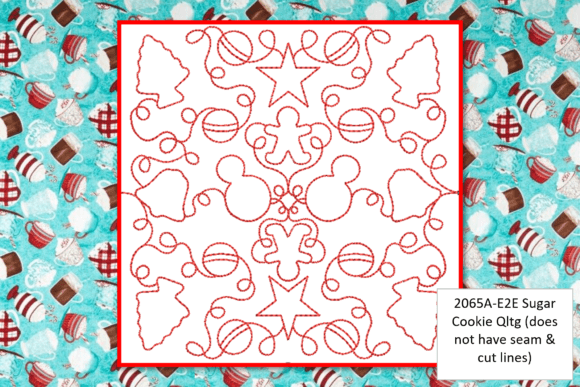
E2E Sugar Cookie Quilting
First Impression: Festive, Friendly, and Instantly Recognizable
As an embroidery designer who’s prepped over 200 craft fair booths—and shipped thousands of digital embroidery files to Etsy sellers and boutique makers—I’ll say it plainly: E2E Sugar Cookie Quilting lands with cheerful warmth. It’s not stark or minimalist. It’s not overly ornate or fussy. It reads as festive but grounded—a perfect blend of Christmas charm and handmade authenticity. The name alone cues nostalgia: sugar cookies, holiday baking, cozy kitchens, handwritten recipe cards. That emotional resonance is gold at a craft fair, where shoppers make split-second decisions based on feeling—not specs.
Where It Shines: Product-by-Product Reality Check
In my booth setup this season, I’m testing E2E Sugar Cookie Quilting across seven core handmade items: tea towels, canvas tote bags, denim aprons, embroidered patches, cotton pouches, linen pillow covers, and unstructured market bags. Here’s what stands out:
- Tea towel embroidery: A natural fit. The design reads clearly at 4–5 inches wide, holds detail without bleeding on terry texture, and feels elevated—not “cute overload.” Customers consistently pause here first.
- Tote bag design: Works best centered on the front panel (not corner-appliquéd). At 6–7 inches, E2E Sugar Cookie Quilting balances boldness and delicacy—big enough to catch eyes from 10 feet, fine enough to avoid looking mass-produced.
- Embroidered patch: Highly viable—but only as a 3-inch finished size. Smaller, and cookie details blur; larger, and stitch density risks puckering on lightweight twill backings.
- Apron embroidery: Ideal placement is lower left chest or pocket flap. Avoids competing with functional elements while reinforcing the “baking artisan” story buyers love.
- Pillow covers & pouches: Performs beautifully on smooth-weave cotton and linen. Less ideal on heavy duck cloth or velvet—dense areas may flatten or distort.
What Buyers Actually Notice (and Why It Sells)
At craft fairs, attention spans are short and tactile engagement is high. E2E Sugar Cookie Quilting wins because it’s immediately legible—no squinting, no decoding. Unlike abstract or monogram-heavy designs, this one tells a story in under two seconds: holiday, handmade, joyful, kitchen-centered. That clarity boosts booth dwell time, encourages photo-taking (great for Instagram tags), and lifts perceived value—even on $28 tea towels. For Etsy sellers, that translates directly to stronger conversion on listings with clean printable mockups showing E2E Sugar Cookie Quilting on multiple product types.
Production Practicalities: Speed, Consistency, and Risk Points
Yes, E2E Sugar Cookie Quilting is built for efficiency—but don’t assume “easy” means “no prep.” As a commercial embroidery designer, I’ve seen this file misapplied on dark fabric (low thread contrast), curved cap surfaces (stitch pull distortion), and textured flour-sack towels (detail loss in dense zones). Key production notes:
- Avoid using E2E Sugar Cookie Quilting smaller than 2.75 inches—tiny icing swirls and cookie edges lose definition.
- On thick or napped fabrics, reduce stitch density slightly or add cutaway + tear-away stabilizer combo.
- Test thread colors against your base fabric—cream-on-cream reads soft and premium; red-on-navy can mute festive energy unless thread sheen is high.
- Confirm hoop size compatibility before batch runs—some versions require 5x7”, others fit 4x4”. Don’t guess.
Design Assets That Build Your Brand—Not Just Your Inventory
E2E Sugar Cookie Quilting isn’t just a machine embroidery design—it’s a versatile design asset. When used consistently across your small shop product line (e.g., matching tea towel + pouch + apron), it strengthens brand recognition without needing logos or slogans. Craft fair shoppers remember the *feeling* of your booth—the warmth, the cohesion, the handmade quality—and E2E Sugar Cookie Quilting delivers that through repetition done right. Bonus: it photographs cleanly for social media and Etsy banners, especially with natural lighting and neutral backdrops. No filters needed.
Before You Stitch: Five Non-Negotiable Designer Checks
- Test on scrap fabric—same weight, weave, and dye lot as your production run.
- Review spacing and fill transitions—look for skipped stitches or nesting issues in tight cookie curves.
- Verify commercial licensing—if selling finished products, confirm E2E Sugar Cookie Quilting permits end-use resale (many digital embroidery files do—but always double-check).
- Create one real mockup—not just a digital preview. Hold it. Drape it. See how light hits the stitches.
- Compare fabric colors side-by-side—ivory thread on oatmeal linen reads differently than on white cotton poplin. Adjust thread selection accordingly.
Final Verdict: A High-Return, Low-Risk Holiday Staple
E2E Sugar Cookie Quilting isn’t flashy—but it’s reliable, emotionally resonant, and commercially smart. It fits seamlessly into Christmas-themed collections without screaming “seasonal only,” and its farmhouse-festive tone bridges generations of buyers. For craft fair sellers, it’s a booth anchor. For Etsy sellers, it’s a top-performing digital embroidery file with strong cross-product potential. For embroidery business owners, it’s batch-friendly, license-clear (when verified), and easy to explain to wholesale partners. Just remember: its strength lies in thoughtful execution—not speed alone. Respect the fabric, honor the stitch, and let E2E Sugar Cookie Quilting do what it does best—invite joy, one handmade product at a time.