Christmas Little Tit
A Festive, Whimsical Focal Point for Handmade Holiday Goods
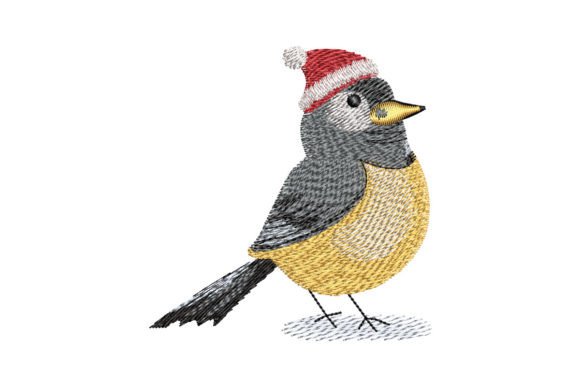
As an embroidery designer who’s prepped over 200 craft fair booths—and shipped thousands of embroidered tea towels, totes, and patches—I opened the Christmas Little Tit file with a quiet grin. This isn’t just another snowflake or reindeer motif. It’s a character: a plump little tit with a bright yellow belly, perched confidently on fluffy snow, wearing a jaunty red New Year’s cap. Instantly, it reads as festive, soft, and gently whimsical—not overly rustic, not aggressively modern, but warmly handmade. That balance is gold at a holiday market where shoppers are scanning dozens of booths in under three minutes.
Where Christmas Little Tit Shines on Craft Fair Products
This machine embroidery design thrives where charm and clarity intersect. On a natural linen tote bag? Perfect—its cheerful scale draws eyes from six feet away without overwhelming the fabric. On a cotton apron? Ideal for placement above the pocket, giving personality without competing with stains or wear. As tea towel embroidery? A standout: the snowy base reads beautifully against textured terry cloth, and the red cap pops against cream, oat, or charcoal backgrounds.
For embroidered patches, Christmas Little Tit works best at 3.5"–4.5" wide—large enough to preserve the cap’s shape and belly definition, small enough to sew onto kids’ backpacks or denim jackets. On curved surfaces like caps or pouches, test stitch density first: the “fluffy snow” detail can blur if overstuffed or hooped too tightly. Pillow covers and small fabric pouches benefit most when Christmas Little Tit anchors the center—no extra framing needed. Its composition is inherently balanced, making it forgiving for uneven fabric tension or beginner-level hooping.
What Makes It Sell—Fast—At a Market Booth
In person, Christmas Little Tit earns attention because it feels story-driven. Customers don’t just see a bird—they see a tiny winter guardian, friendly and festive. That emotional hook matters more than perfect symmetry when someone’s choosing a handmade gift. I’ve watched buyers pause, smile, and point—then pick up the matching tea towel *and* the patch set. That cross-product pull is rare and valuable.
It photographs exceptionally well for Etsy listings and printable mockups. The high-contrast elements (red cap, yellow belly, white snow) hold up across lighting conditions, and its compact height-to-width ratio fits cleanly in square social posts and thumbnail grids. Unlike sprawling wreath designs, Christmas Little Tit doesn’t require cropping or zooming—it lands clearly, even on mobile screens.
Production Realities: What Works (and What Needs Caution)
This is not a “set-and-forget” embroidery file. Its charm lives in delicate contrasts—so stitch density, thread choice, and stabilizer matter deeply. The yellow belly and red cap must stand out against both light and dark fabrics; always test thread colors on your actual base fabric—not just white scrap. Dense fill areas (like the cap’s fold or snow texture) can pucker on thick toweling or fleece unless you use cutaway + tear-away combo stabilizer.
Avoid shrinking Christmas Little Tit below 2.75". At smaller sizes, the cap loses dimension and the snow detail flattens into a muddy blob. On textured tea towels, skip satin-stitch snow accents—opt for gentle tatami fill instead. And never embroider it directly onto unlined curved caps without testing hoop pressure: the bird’s posture can warp if the fabric shifts mid-stitch.
Design Strengths That Build Brand & Booth Impact
Christmas Little Tit elevates perceived value instantly. It reads as premium—not because it’s complex, but because it’s intentional. That sense of care reinforces your shop’s handmade quality, whether you’re an Etsy seller listing digital embroidery files or a boutique maker selling finished product. In a booth display, it creates cohesion: one design, multiple applications (tote, patch, pillow), unified by mood—not just color. That consistency builds recognition faster than rotating motifs.
It also supports repeat production. Unlike intricate lettering or multi-layered scenes, Christmas Little Tit stitches cleanly across fabric types and machines. Once dialed in, it batches reliably—critical when prepping 40+ items for a weekend fair. And because it avoids seasonal clichés (no mistletoe, no bells, no glitter fonts), it feels fresh year after year—ideal for sellers building long-term design assets.
Essential Designer Notes Before You Stitch
- Always test on scrap fabric—especially with your target base (linen, terry, twill) and chosen stabilizer.
- Check thread contrast on both light and dark fabrics. Yellow thread on ivory linen? Gorgeous. On navy denim? Nearly invisible.
- Review spacing between bird elements—if the cap floats too far from the head, adjust digitizing or re-hoop.
- Confirm hoop size compatibility. If your machine requires larger hoops than expected, redesign placement—not the art.
- Inspect stitch density in the snow and cap areas. Overly dense fills cause stiffness and breakage on lightweight fabrics.
- Use appropriate stabilizer: cutaway for knits and stretchy fabrics; tear-away + topping for textured tea towels.
- Create at least one real mockup—not just a digital preview—before ordering bulk fabric or listing online.
- Compare how Christmas Little Tit looks on different fabric colors. A warm oat linen enhances the yellow belly; cool gray denim makes the red cap sing.
- Verify commercial licensing terms before selling finished products. As a digital embroidery file or physical item, rights must align with your business model.
Final Thought: A Design That Sells Because It Feels Like a Gift
Christmas Little Tit doesn’t shout. It invites. That quiet confidence—paired with smart, scalable execution—is why it converts at craft fairs, moves units on Etsy, and becomes a signature piece for small shop owners. It’s proof that sometimes, the smallest bird carries the biggest holiday warmth. Just make sure your thread, stabilizer, and intention match its spirit—and you’ll have a craft fair favorite, season after season.