Enchanted Stiletto 7
A Designer’s First Glance: Elegance That Doesn’t Drag
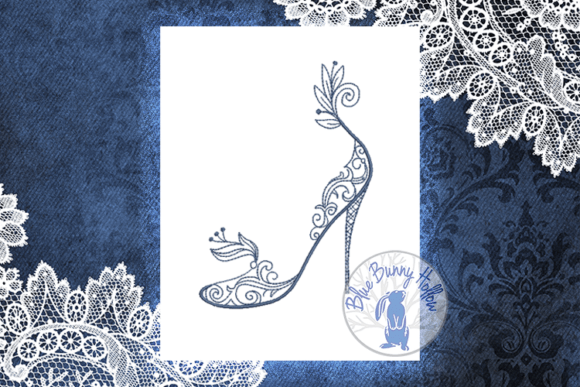
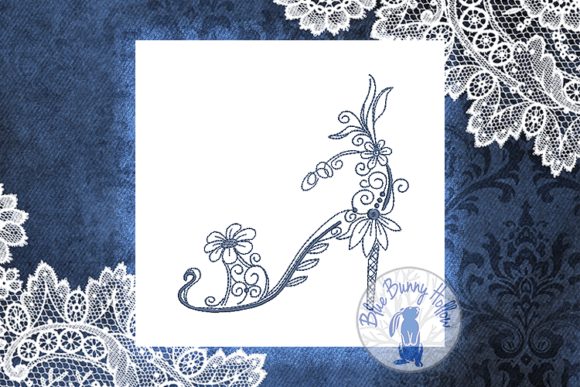
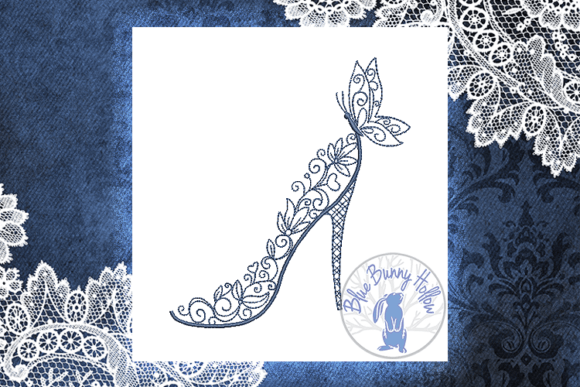
When Enchanted Stiletto 7 landed in my inbox, I paused mid-coffee sip—not because it screamed for attention, but because it refused to shout. This is a bluework-style embroidery design, so right away, I knew it would rely on clean line work, intentional negative space, and confident minimalism. No dense fills, no overwrought flourishes—just a poised, slender stiletto rendered with quiet precision. It feels like handwriting: personal, controlled, and just a little mysterious. I immediately pictured it stitched on a linen tote bag for a boutique launch—something customers would pause to trace with their fingers, not just glance at.
Where It Lives Best: Real Projects, Real Impact
I tested Enchanted Stiletto 7 across three real-world scenarios: a heavyweight cotton apron for a local bakery’s staff gift set, a soft-loop terry tea towel for a holiday market stall, and a lightweight chambray baby onesie (yes—tiny, but deliberate). In each case, the design held its character without fighting the fabric. On the apron, the sharp lines popped against the natural texture; on the tea towel, it read clearly even from six feet away; on the onesie, it stayed legible and gentle—no bulky satin stitch overwhelming the delicate scale.
This isn’t a design that begs for center-stage placement. It works beautifully as a subtle chest accent on a sweatshirt, a refined corner motif on a pillow cover, or a quiet signature on the hem of a cloth napkin. For Etsy sellers and small shop owners, Enchanted Stiletto 7 adds quiet sophistication to handmade product lines—especially where “elegant but approachable” is the brand voice. It reads as intentional, not trendy, which means it ages well in digital embroidery file collections and printable mockups.
Where It Needs Thoughtful Handling
Bluework elegance has limits—and Enchanted Stiletto 7 respects them. I wouldn’t push it onto highly textured fabrics like bouclé or thick terry without testing first: fine line work can disappear into pile. On stretchy knits—think ribbed baby caps or fitted tees—stabilizer choice becomes non-negotiable. A light cutaway plus tear-away combo kept the lines crisp on my test sweatshirt; skipping stabilizer blurred the heel detail entirely.
Dark fabrics demand extra attention. Since Enchanted Stiletto 7 relies on line definition rather than bold contrast, stitching it in white thread on black twill requires tighter tension control and possibly a slightly heavier thread weight (40-weight instead of 50) to ensure visibility. And while it scales down well, I’d avoid hooping it smaller than 3.5 inches wide—any tighter, and the delicate toe curve starts to lose its grace in fill stitch transitions.
Also worth noting: this isn’t an applique design. There’s no background shape or border to anchor it. That’s a strength for versatility—but it means alignment matters more on curved surfaces like caps or mugs (if used for embroidered patches sewn onto sleeves). Double-check your placement marks before hooping.
What It Does for Your Finished Product
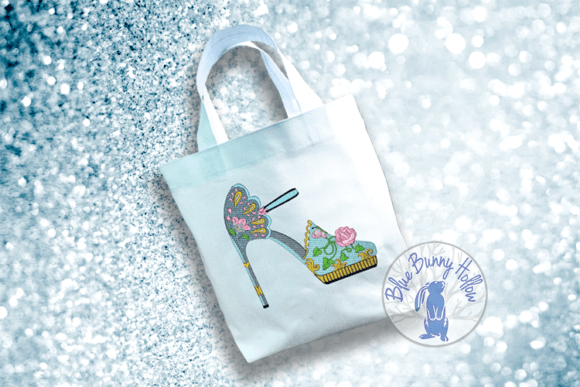
Enchanted Stiletto 7 elevates perception—not through flash, but through restraint. Customers notice it less as “embroidery” and more as “intention.” On personalized gifts—a monogrammed tote with Enchanted Stiletto 7 stitched discreetly near the handle—it signals care, not clutter. For commercial embroidery projects, it builds trust: clean execution says you understand proportion, spacing, and fabric behavior.
It also supports brand consistency. Because it’s not tied to a season or trend, it fits seamlessly across product categories—home décor, accessories, apparel—without needing rebranding. A craft business using it on both tea towels and baby blankets creates visual cohesion without repeating motifs. And for digital product sellers, its simplicity makes it highly adaptable in mockups: one clean vector-style preview works across light and dark backgrounds, eliminating the need for multiple renders.
Practical Designer Notes Before You Stitch
- Always test on scrap fabric first—especially if pairing with new thread colors or stabilizers.
- Review stitch density: Bluework designs like Enchanted Stiletto 7 typically use running and satin stitches sparingly, but verify no unintended overlaps or thin spots in the heel or strap lines.
- Confirm hoop size compatibility with your machine and intended project—some versions may include multiple sizes; choose based on your fabric and placement needs.
- Inspect small details at 200% zoom in your embroidery software: look for stray jump stitches or tiny unconnected segments that could snag during trimming.
- Test in black and white mockups to assess contrast before committing to final thread choices.
- Use proper stabilizer—lightweight cutaway for stable wovens, soft tear-away for knits, and always float a topping on napped fabrics like fleece.
- Check licensing terms before selling finished items or bundling Enchanted Stiletto 7 into digital embroidery file packs—commercial use rights aren’t automatic.
Final Thought: A Design That Serves the Maker
Enchanted Stiletto 7 doesn’t ask for attention—it earns it. As a machine embroidery design, it’s forgiving enough for confident beginners yet refined enough for seasoned designers building cohesive product lines. It works quietly behind the scenes: on a holiday embroidery gift, it adds charm without kitsch; on a boutique’s custom apparel, it whispers quality; on a small shop product, it helps customers remember *how* something felt—not just what it was. That’s the mark of a truly usable embroidery file. Not flashy. Not fussy. Just right.