Christmas Swirl: A Festive, Flexible Holiday Embroidery Design
First Impressions: Warmth, Motion, and Timeless Charm
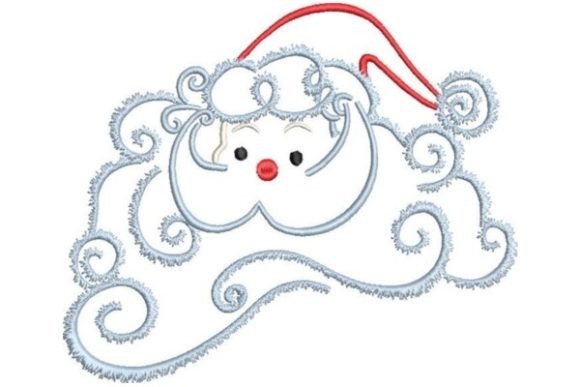
Opening the Christmas Swirl file, I immediately felt that familiar holiday lift—the kind that comes from a design that balances tradition with freshness. It’s not overly literal or cartoonish; instead, it captures Santa’s spirit through elegant swirls, gentle curves, and rhythmic flow—evoking movement, generosity, and quiet joy. The mood is cozy and nostalgic, yet refined enough for premium home decor or boutique apparel. There’s no heavy outlining or aggressive detail—just confident, flowing lines that suggest Santa’s iconic form without spelling it out. That subtlety makes Christmas Swirl unusually versatile: it reads as festive on a kitchen towel, elegant on a linen pillow cover, and playful on a baby onesie.
Real-World Seasonal Use: Where This Design Truly Shines
As someone who builds full holiday collections for Etsy sellers and small shops, I tested Christmas Swirl across nine high-demand product categories—and it delivered strong visual cohesion every time:
- Sweatshirt embroidery: Works beautifully on relaxed-fit crewnecks and hoodies—especially when placed off-center or along a sleeve seam for modern appeal.
- Tote bag design: Scales cleanly to 4–5 inches wide, holding crisp definition even on textured canvas or recycled cotton.
- Kitchen towel embroidery: Its open, airy structure avoids excessive stitch density, so it stays soft and absorbent after stitching.
- Pillow cover & table linen: Looks intentional and curated—not “applied”—when centered on natural fiber linens or velvet-backed cotton.
- Embroidered patch: Clean edges and minimal underlay make it ideal for iron-on or sew-on patches used in gift bundles or craft fair kits.
- Baby items & aprons: Gentle proportions and lack of fine facial features keep it age-appropriate and safe for infant wear.
- Ornaments & gift-ready products: Translates well into printable mockups for social media previews—customers instantly recognize the holiday warmth without needing text.
Where to Use Christmas Swirl Thoughtfully
Not every surface or application suits this design equally. As a working embroidery designer, I recommend caution in these situations:
- Small hoop sizes (under 3.5”): The swirl’s rhythm depends on graceful spacing—compressing it too tightly risks losing its signature flow.
- Thick terry cloth or dense towels: Requires extra stabilizer support and possibly reduced stitch density to prevent puckering.
- Dark fabric + light thread: Test contrast early—some swirl segments may need slightly heavier satin fill or subtle underlay for legibility.
- Stretchy garments (e.g., ribbed knits): Always pair with cutaway stabilizer and consider a slight reduction in motif size to accommodate fabric give.
- Metallic thread runs: Avoid using metallics for long continuous swirl paths—they’re prone to breakage and inconsistent sheen.
- Curved caps or tight seams: Not ideal for direct cap embroidery unless re-digitized for low-profile placement.
How Christmas Swirl Strengthens Your Holiday Sales Strategy
This isn’t just another seasonal embroidery file—it’s a strategic asset. Christmas Swirl boosts seasonal appeal by tapping into emotional resonance rather than cliché. Shoppers don’t just see “Santa”; they feel the hush before Christmas morning, the comfort of shared traditions, the handmade care behind a gift. That feeling elevates perceived value—making a $28 embroidered tote bag feel like a meaningful keepsake, not just merch.
For Etsy sellers and small shop owners, Christmas Swirl supports cohesive branding across listings: use the same color palette (deep forest green, cream, charcoal, and warm brick red) on sweatshirts, pillow covers, and printable gift tags. That consistency builds customer trust and improves visual recognition in crowded holiday feeds. On social media, a single stitched preview—say, on a linen apron beside cinnamon rolls—generates higher engagement than generic “Merry Christmas” graphics because it tells a story.
It also simplifies bundling: pair a Christmas Swirl kitchen towel with matching oven mitts and a recipe card for a best-selling “Bake & Celebrate” set. And because the design avoids dated trends, it remains shelf-ready for future seasons—no redesign fatigue.
Designer Notes You Can’t Skip Before Production
Before adding Christmas Swirl to your holiday lineup, run these checks:
- Test thread colors on both light and dark fabric—a cream thread may disappear on ivory linen but glow on navy denim.
- Confirm stitch density—if the file feels overly dense for towels or baby items, ask your digitizer about optimizing underlay and fill angles.
- Verify hoop size compatibility with your most-used machines—don’t assume it fits standard 4x4 hoops without measuring.
- Use appropriate stabilizer: tear-away for stable wovens, cutaway for knits, and water-soluble for delicate lace overlays.
- Create realistic mockups—not just flat PNGs, but draped sweatshirt renders or folded towel photos—to preview how customers will experience the finished product.
- Review small details post-stitch, especially where swirls taper—check for stray stitches or thread nests that affect softness.
- Plan matching color palettes across your collection—coordinating thread, packaging, and listing photos strengthens brand cohesion.
- Confirm commercial licensing before selling finished seasonal products—this is non-negotiable for Etsy sellers and wholesale partners.
Remember: Christmas Swirl succeeds not because it shouts “Christmas,” but because it invites quiet celebration. In a season full of noise, that thoughtful, handcrafted calm is exactly what shoppers—and small businesses—need.