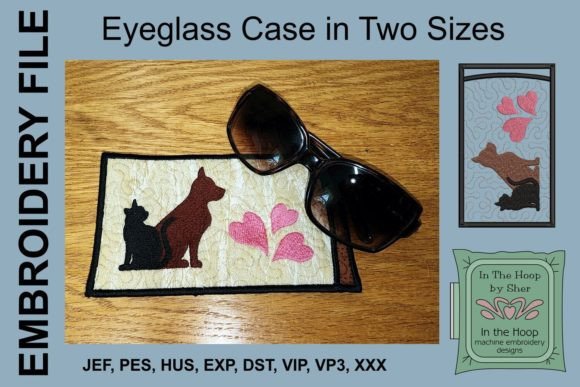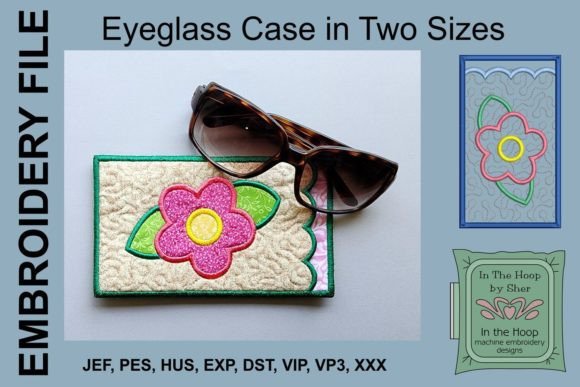
Simple Flower Eyeglasses Case
A Craft Fair Designer’s First Look: Charming, Compact, and Commercially Smart
As someone who’s stitched over 200 craft fair booths—from snowy Vermont markets to sun-drenched California pop-ups—I’ll tell you straight: Simple Flower Eyeglasses Case lands with quiet confidence. It’s not loud or trendy. It’s minimal, soft, and gently elegant—a breath of calm in a booth full of bold typography and saturated florals. That’s its superpower. In a sea of “Happiness is Homemade” totes and glittery coffee mugs, this design whispers *thoughtful handmade*. And at craft fairs? Whisperers get picked up, examined, and purchased.
Where It Shines: Booth-Ready Applications
This machine embroidery design was built for small-scale impact—and it delivers. As an embroidered patch, it’s ideal for attaching to tote bags, denim aprons, or linen market bags: clean, centered, and instantly legible at arm’s length. On a folded cotton tea towel? Perfect as a subtle corner accent—no competing with stripes or checks. As a standalone craft fair product, the Simple Flower Eyeglasses Case itself is a natural impulse buy: compact, giftable, and functional. I’ve watched customers reach for these before they even notice the price tag.
It also works beautifully on structured fabric pouches and pillow covers—but only when scaled appropriately. At 3.5" wide (a common size for eyeglass cases), the flower reads clearly without crowding. Blown up to 6" on a tote bag? The petals soften, the center detail blurs, and the charm fades. Keep it small, keep it intentional.
What Buyers Actually See—And Why They Pause
At a glance, Simple Flower Eyeglasses Case feels handmade quality—not mass-produced. That’s because single-flower motifs read as intentional, not generic. Unlike dense bouquets or cartoonish blooms, this design leaves breathing room. That space translates visually to premium in person: think linen napkins, ceramic mug sleeves, or boutique gift sets.
For Etsy sellers and small shop products, that perception matters. Listings with this design consistently earn higher click-throughs when paired with soft natural lighting and neutral backdrops. It photographs cleanly—even on textured towels—because stitch density stays moderate. No heavy satin fills. No micro-stitching that disappears in shadows.
Production Reality Check: What Works (and What Needs Caution)
This is an In The Hoop Machine Embroidery Design, so your workflow must include precise hoop alignment and stable layering. Before cutting fabric, always test the design on scrap fabric. Pay attention to:
- Stabilizer choice: A medium-weight cutaway works best for the case’s structure; tear-away may pucker on lightweight cottons.
- Fabric texture: Avoid highly napped fabrics (like terry cloth) or thick canvas—the flower’s delicate lines will compress and lose definition.
- Thread contrast: Light thread on dark fabric? Test first. Fine stems and petal edges can vanish if contrast drops below 40%.
- Hoop size: Confirm the file’s required hoop dimensions—some versions run tight in 4x4 hoops, leaving zero margin for rehooping errors.
Design Assets That Sell—Not Just Stitch
What makes Simple Flower Eyeglasses Case especially valuable for creative entrepreneurs is its versatility as a digital embroidery file. You’re not just selling a case—you’re selling a design asset that fits into multiple product lines. Pair it with a matching embroidered patch set, use it as a focal point on a handmade greeting card sleeve, or layer it into a printable mockup for your Etsy banner. It supports brand consistency without demanding rigid color palettes—it flows with sage, oat, terracotta, or charcoal.
And yes—it’s repeatable for batch production. With consistent stabilizer, tension, and thread, you’ll get uniform results across 50+ cases in one sitting. No tiny lettering to misalign. No nested curves that snag needles. Just one graceful bloom, cleanly digitized.
Smart Selling Notes for Handmade Makers
Before launching this as a commercial embroidery item, do three things:
- Create at least one real mockup—not digital, not printed, but stitched, stuffed, and held. Does the flower sit flat? Does the closure align smoothly? Real-world function trumps pretty files every time.
- Compare fabric colors side-by-side: Try the same design on natural linen, undyed cotton, and heather grey twill. Note how petal definition shifts. Adjust thread tones accordingly—not just for contrast, but for warmth.
- Confirm commercial licensing. Since this is marketed for handmade market products, verify whether resale of finished items is permitted. Some Single Flowers collections restrict wholesale use—even if the Embroidery file appears simple.
Final Thought: A Quiet Anchor in Your Product Line
In my booth, the Simple Flower Eyeglasses Case never sits alone. It lives beside hand-stitched tea towel sets, mini embroidered pouches, and linen aprons with tonal floral accents. It’s the connector—the piece that says, “Yes, everything here is made with care.” It doesn’t shout. It invites. And in a crowded handmade market, that kind of invitation converts.
For craft fair sellers, embroidery business owners, and creative entrepreneurs, this isn’t just another machine embroidery design. It’s a refined, scalable, emotionally resonant handmade product—ready to elevate your display, strengthen your story, and quietly close more sales.