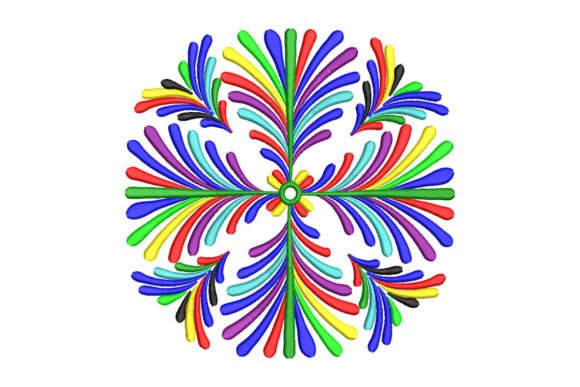
Otomi Design Mexican
First Impression: Bold, Festive & Deeply Cultural
As an embroidery designer who’s prepped over 200 craft fair booths—and shipped thousands of machine embroidery designs to Etsy sellers and boutique makers—I opened Otomi Design Mexican expecting vibrant storytelling. And it delivered. This isn’t just “Mexican-inspired”—it’s rooted in the Otomi tradition: symmetrical motifs, stylized flora and fauna, rhythmic line work, and a sense of joyful abundance. At first glance, it reads as bold yet balanced—festive without being kitschy, decorative without sacrificing clarity. That’s rare. In a crowded market of generic florals and minimalist geometrics, Otomi Design Mexican stands out because it feels intentional, cultural, and handmade—even before stitching begins.
Where It Shines: Craft Fair-Ready Product Pairings
This design thrives where personality meets utility. On a natural canvas tote bag? Instant magnetism—customers pause mid-aisle. The scale works beautifully centered on the front panel or scaled down for a subtle corner accent. As apron embroidery, it adds artisanal warmth to kitchen or studio wear—especially when placed above the pocket or along the bib edge. For tea towel embroidery, I recommend positioning it low on the hem: the repeating motifs echo traditional textile borders, and the contrast pops against linen or cotton terry.
Otomi Design Mexican also transforms small items into high-perceived-value gifts. Embroidered patches made from this file sell like fire at markets—especially when backed with iron-on adhesive and offered in sets. On fabric pouches and pillow covers? It anchors the piece with visual weight and narrative depth. And yes—it works on jackets and framed art, but for craft fairs, I prioritize pieces that invite touch and tell a story fast. That’s why tote bag design, embroidered patch, and pillow cover are my top three applications for Otomi Design Mexican.
What Buyers Actually Notice (and Why It Converts)
At a craft fair, attention lasts 3–5 seconds. Otomi Design Mexican wins that blink-and-you-miss-it moment because of its strong silhouette and rhythmic repetition. Customers don’t need to read a label to feel its origin—they recognize the motif language. That builds instant trust in your handmade product. It also elevates perceived value: a $28 tote bag with this design reads like a collector’s item, not mass-produced decor. For Etsy sellers, that translates directly to better conversion on listings—especially when paired with a clean printable mockup showing the design on multiple fabrics and products.
Booth display strength is another win. Group three items—a tea towel, a patch set, and a small pouch—all featuring Otomi Design Mexican in coordinated thread colors—and you create visual rhythm. That cohesion signals brand consistency, even if you’re a solo maker. Buyers engage longer, ask deeper questions, and remember your booth name.
Production Reality Check: What Works (and What Needs Care)
This is a confident machine embroidery design, but it’s not “set-and-forget.” Its charm lies in detail—so stitch density matters. Dense fill areas (like central floral clusters) may require medium-weight cutaway stabilizer on lightweight fabrics, and extra care on textured towels where stitches can sink. On curved surfaces like caps, test placement first—the outer edges of the motif should avoid the seam ridge to preserve symmetry.
Small lettering isn’t present here (a plus), but tiny animal eyes or leaf veins *are*. Those details hold up well at 4–5" wide—but shrink below 3", and clarity blurs. So for small shop product lines like keychain pouches or mini patches, stick to the 3.5" minimum size. Also: dark fabric demands high-contrast thread colors. Don’t assume black thread on navy will read—test with ecru or gold for warmth and legibility.
Smart Workflow Tips for Sellers & Makers
Before cutting fabric or listing on Etsy: test the embroidery file on scrap fabric—same type, same color, same stabilizer you’ll use for production. Check spacing between motif repeats if you’re using it as a border. Confirm hoop size compatibility (many Otomi layouts fit standard 5x7" hoops, but verify). Review stitch density visually in your embroidery software—look for overlapping fills that could cause puckering.
Create at least one real-world mockup—not digital, not printed, but stitched, pressed, and photographed in natural light. Compare how Otomi Design Mexican reads on oat, indigo, and cream fabric. Note which thread colors make the design sing versus mute it. And crucially: confirm commercial licensing. Since the description states “you can use it on dresses, clothes, tote bags, jackets, home decor, and framed art,” it appears cleared for commercial embroidery—but always double-check the license included with your digital embroidery file. Never assume.
Final Verdict: A High-Return Craft Fair Staple
Otomi Design Mexican isn’t just another embroidery file—it’s a conversation starter, a cultural connector, and a proven performer across craft fair product categories. It balances authenticity with versatility, detail with scalability, and tradition with modern appeal. For the Etsy seller refreshing their bestsellers, the boutique maker building a signature line, or the Cricut + embroidery hybrid crafter expanding into stitched goods—it delivers strong ROI per hour stitched.
In short: if you’re curating a booth full of handmade products that feel both meaningful and market-ready, Otomi Design Mexican belongs in your design assets. Just remember: respect the detail, test thoroughly, and let the motif speak for itself. Your customers—and your bottom line—will thank you.