Dancing Skeleton: A Playful, Seasonal Embroidery Design Worth Personalizing
First Impressions: Charm, Character, and Unexpected Warmth
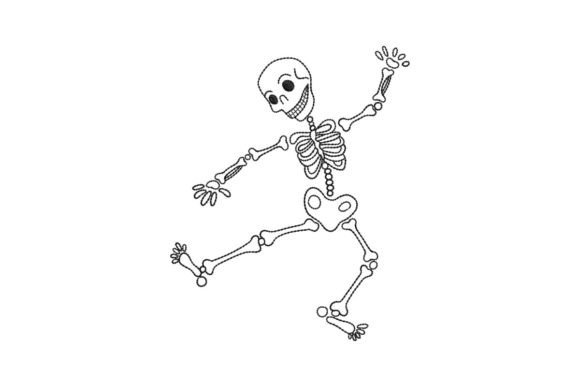
As an embroidery designer who’s tested hundreds of machine embroidery designs for personalized gift shops, I’ll say it outright: Dancing Skeleton surprised me—not with spookiness, but with genuine charm. It’s not grim or macabre; it’s lighthearted, rhythmic, and full of personality. The pose feels joyful—arms up, one leg lifted, ribcage tilted like it’s mid-twirl. That subtle tilt is key: it gives motion without sacrificing stability in stitching. The line work is clean but not sterile—there’s a hand-drawn warmth to the curves, making it feel handmade even before it hits fabric. It lands firmly in the “playful modern” category, with strong seasonal resonance for Halloween—but crucially, it’s versatile enough to transcend the holiday when styled thoughtfully.
Where Dancing Skeleton Shines on Personalized Gifts
This design excels where personality meets practicality. On a soft organic cotton baby blanket? It reads as whimsical, not eerie—especially when stitched in ivory thread on oatmeal linen. For wedding gifts, imagine Dancing Skeleton embroidered discreetly on the corner of a linen napkin set or a custom apron for the couple who met at a masquerade ball. It adds wit without undermining romance. Nursery decor becomes memorable: a framed pillow cover with Dancing Skeleton dancing beside a tiny moon-and-stars motif creates gentle contrast—sweet yet distinctive. And for Etsy sellers? This is a standout for custom tote bags, embroidered kitchen towels (think “Dancing Skeleton” above a playful phrase like “I Stir With Soul”), and pillow covers that spark conversation at craft fairs.
Smart Pairings for Real-World Products
- Baby embroidery: Works beautifully on receiving blankets, onesie pockets (if size permits), and nursery wall hangings—just avoid ultra-fine details near seams or elastic.
- Wedding gift: Elevates linen cocktail napkins, guestbook sleeves, or a “first dance” keepsake pillow cover—pair with metallic gold or rose-gold thread for elegance.
- Embroidered towel: Best on medium-weight cotton terry—avoid thick, plush towels where stitch definition blurs.
- Pillow cover & blanket embroidery: Ideal for crisp cotton, linen blends, or brushed poly-cotton. Keeps its shape and readability across washes.
- Etsy seller & small shop product: Highly photogenic—its strong silhouette pops in natural light, boosting buyer engagement and perceived handmade quality.
Where to Use Dancing Skeleton Thoughtfully
Not every surface is equal—and Dancing Skeleton’s expressive lines deserve intention. Avoid it on stretchy baby clothes (like knits) unless you’ve confirmed the stitch density holds without puckering. Curved surfaces—think mugs or curved tote handles—distort fine limb angles; stick to flat or gently contoured areas. Dark fabric demands careful thread color testing: white or pale gray thread may lack contrast, while neon orange or electric blue can amplify its energy. Thick terry cloth towels require extra stabilizer and possibly reduced stitch density to prevent stiffness. And if your version includes tiny decorative elements (dots, stars, or micro-details), test those separately—they’re often the first to vanish on textured or loosely woven fabrics.
How Dancing Skeleton Builds Trust and Giftability
Customers don’t just buy stitches—they buy meaning, confidence, and emotional resonance. Dancing Skeleton delivers that through clarity and consistency. Its balanced proportions and confident outline make it instantly recognizable, even at smaller sizes (3–4 inches). That builds trust: buyers know exactly what they’ll receive. When photographed well—on a folded linen towel, draped over a wooden chair, or nestled into a gift box—it reads as intentional, curated, and high-value. For handmade product sellers, that translates directly to stronger conversion rates and fewer “Is this really what it looks like?” questions. It also invites personalization: add a name, date, or short phrase nearby without overwhelming the core image. That flexibility makes it ideal for custom order previews and digital embroidery file listings.
Essential Embroidery Notes Before You Stitch
Before committing to customer orders, treat Dancing Skeleton like any professional machine embroidery design—test, verify, refine:
- Test on scrap fabric matching your intended product (e.g., terry cloth for towels, cotton poplin for pillow covers).
- Check thread color contrast on both light and dark fabric swatches—some shades look vibrant in digital mockups but mute in reality.
- Confirm hoop size compatibility—does it fit comfortably in your standard 4x4 or 5x7 hoop? If not, plan layout adjustments early.
- Review stitch density: Is it dense enough to hold detail but light enough to drape softly on apparel or blankets?
- Use proper stabilizer: Tear-away works for stable wovens; cut-away adds security for knits or high-wear items like aprons.
- Compare light/dark fabric mockups—a printable mockup helps visualize real-world impact before stitching.
- Inspect small details post-stitch: Are fingers, toes, or subtle curves fully defined? Adjust tension or digitizing settings if needed.
- Verify commercial licensing before selling finished products—this is non-negotiable for Etsy sellers and small business owners.
In short: Dancing Skeleton isn’t just another Halloween embroidery—it’s a thoughtful, adaptable, and emotionally intelligent machine embroidery design. When used with intention, it transforms everyday items into personalized gifts that delight, surprise, and endure. Whether you're stitching for a baby’s first Halloween, a couple’s unconventional wedding, or your own Etsy shop’s next bestseller, this design earns its place in your digital embroidery file library—not as a seasonal stopgap, but as a lasting tool for connection.