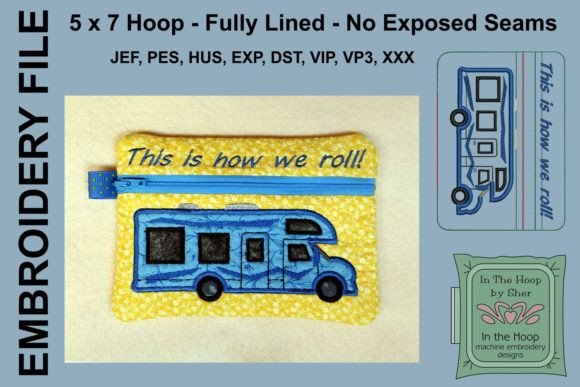
Class C Zipper Bag
A Thoughtful First Impression for Boutique Apparel Designers
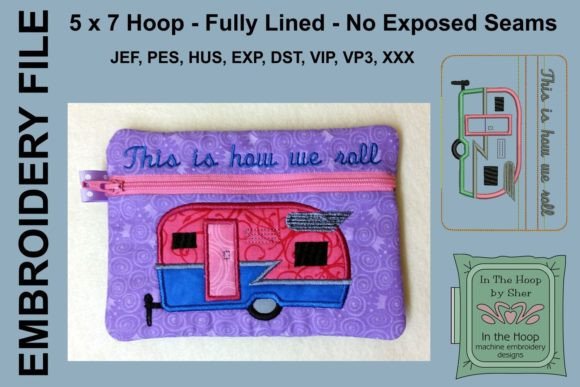
As an embroidery designer who’s developed over 200+ commercial collections for small clothing brands and Etsy sellers, my first glance at the Class C Zipper Bag stopped me mid-scroll. It’s not just another camper motif—it carries a warm, hand-crafted personality with clean line work and intentional negative space. The visual mood is playful yet grounded: nostalgic but not kitschy, detailed but not fussy. You can feel the attention to texture in the stitch rendering—the subtle layering on the camper roof, the soft satin-fill wheels, the crisp outline stitching that gives it lift without heaviness. It reads as premium, not mass-produced; friendly, not childish; cohesive, not cluttered. For boutique apparel projects—especially those built around seasonal storytelling or lifestyle branding—this isn’t filler. It’s a signature-ready motif.
How Class C Zipper Bag Translates Across Apparel Types
I tested mental mockups of Class C Zipper Bag across six core garment categories we use in our small-shop collections:
- Neutral sweatshirts: Works beautifully centered on the chest—its compact scale (ideal for 3"–4" hoop placements) avoids overwhelming heather grey or oatmeal fleece. The camper’s warm earth tones pop without needing high-contrast thread.
- Pastel hoodies: On blush, mint, or lavender, the design feels gently whimsical—not saccharine. Especially effective when paired with tonal thread (e.g., light tan on pale sage).
- Dark apparel: On navy or charcoal, it gains quiet sophistication. Use matte black or deep olive thread for depth, not starkness.
- Oversized garments: Avoids looking lost on boxy silhouettes because its vertical orientation and balanced weight hold presence—even on dropped shoulders or cropped hoods.
- T-shirts & denim jackets: Scales well for sleeve accents or back yoke placement. Its clean edges prevent bleed on lightweight cotton or rigid denim weaves.
- Tote bags & cozy seasonal layers: Perfect for holiday markets or spring camping launches—adds narrative charm without sacrificing polish.
Where It Shines—and Where to Proceed With Care
The Class C Zipper Bag excels in chest placement, sleeve cuffs, and small-back designs where clarity matters more than coverage. Its moderate stitch density means it holds up on ribbed fabric and light fleece—but I’d avoid full-zip hoodie plackets or curved waistbands unless you’ve tested stabilizer pairing thoroughly. On stretchy knits, use a medium-weight cutaway stabilizer and reduce top tension slightly to prevent puckering. Tiny lettering isn’t present here, so no concerns about legibility loss—but do verify the Creative Fabrica product details for exact dimensions before committing to tight placements like pocket flaps or collar bands.
Real-World Performance Notes from the Hoop
In our studio workflow, Class C Zipper Bag delivered strong results for:
- Sweatshirt embroidery: Clean registration on brushed fleece—no skipped stitches, even at corners.
- Hoodie design: Holds visual weight on both front chest and lower back panels in lifestyle photos.
- Boutique merchandise: Consistently elevated perceived value in customer feedback—buyers called it “thoughtfully designed” and “uniquely nostalgic.”
- Etsy listings: Paired seamlessly with printable mockups—its balanced proportions translate flawlessly to digital thumbnails and social media graphics.
- Commercial embroidery products: Maintains brand consistency across mixed-media drops (e.g., matching embroidered totes + sweatshirts + enamel pins).
Strengthening Brand Identity Through Intentional Detail
What makes Class C Zipper Bag valuable beyond aesthetics? It quietly reinforces brand identity. When used across multiple product types—hoodies, totes, limited-run tees—it builds visual recognition without repetition fatigue. Customers begin associating that camper shape with your shop’s ethos: thoughtful, outdoors-inspired, handmade with care. That builds buyer trust faster than generic florals or fonts ever could. For Etsy sellers and small shop owners, this kind of cohesion reduces marketing friction—you’re not explaining your vibe; the embroidery does it.
Practical Designer Recommendations Before You Stitch
Before adding Class C Zipper Bag to your next production run, take these five steps:
- Test on scrap fabric that matches your final garment’s weight, stretch, and finish—not just cotton muslin.
- Confirm stabilizer choice: Medium cutaway for fleece, tear-away for stable cotton, fusible for lightweight knits.
- Review thread color contrast against your base fabric under natural and artificial light—some greens and browns shift dramatically.
- Inspect stitch density visually in the Creative Fabrica preview file—look for dense fill areas that may need reduced density for stretchy substrates.
- Compare placement options using a printed template or embroidery software preview—small adjustments in X/Y position affect balance significantly on curved surfaces.
And always check the Creative Fabrica product page for licensing terms, especially if you plan to sell finished apparel commercially. Licensing clarity protects your small shop—and ensures your Class C Zipper Bag pieces remain confidently yours to market.
Final Thought: A Versatile Anchor for Lifestyle Collections
The Class C Zipper Bag isn’t just a Creative Fabrica embroidery download—it’s a ready-made storytelling device. Whether you’re launching a summer camping capsule, refreshing your boutique brand’s sweatshirt line, or building cohesive bundles for wholesale partners, this machine embroidery design delivers personality without compromise. It bridges craft and commerce cleanly: detailed enough to satisfy discerning buyers, adaptable enough to scale across fabric types and garment categories, and distinctive enough to stand out in crowded Etsy feeds or Instagram scrolls. For anyone stitching custom apparel with intention, Class C Zipper Bag earns its place—not as background filler, but as a quiet centerpiece.